
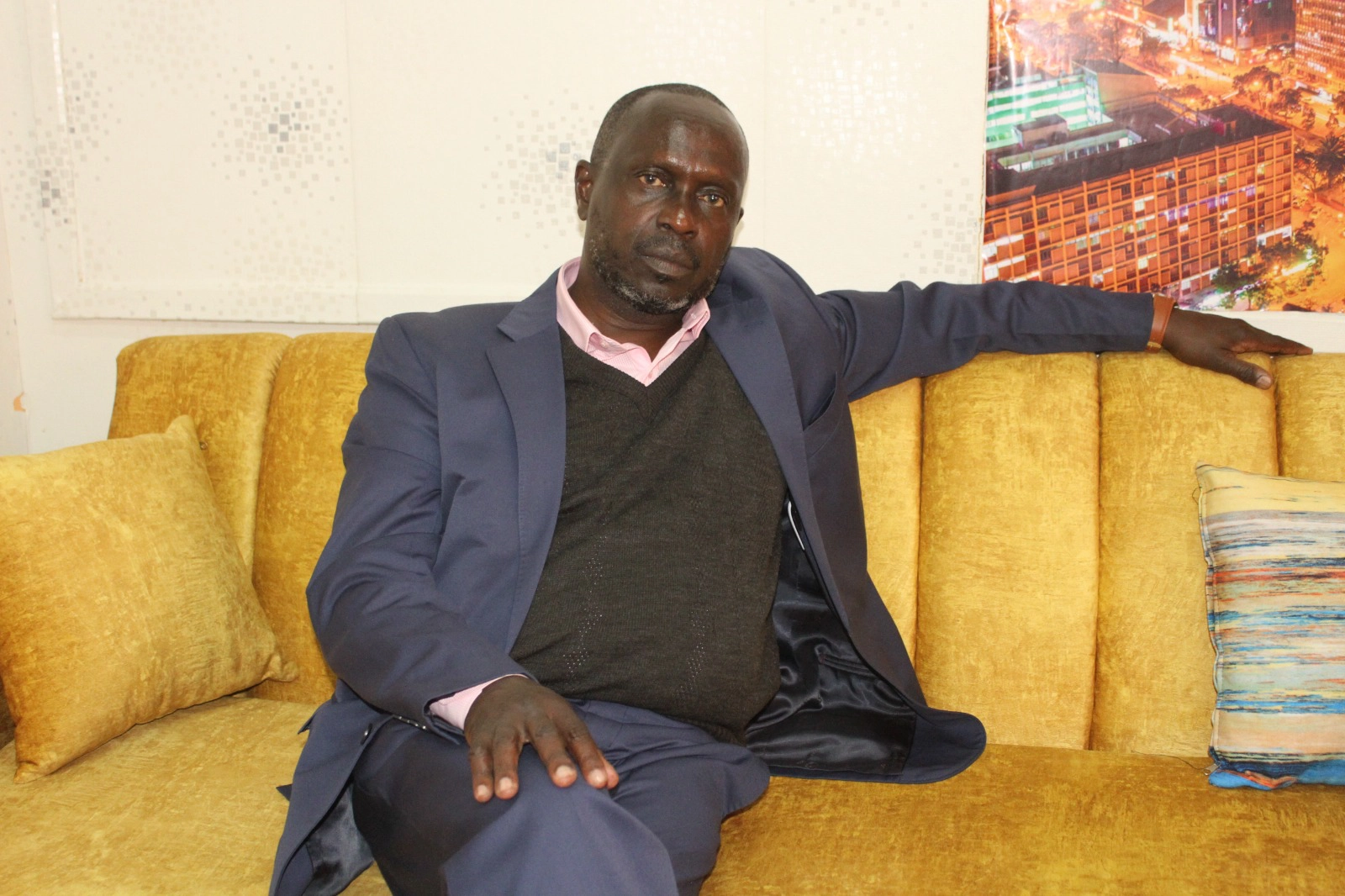

The Insight with JM Kithyaka | Tourism Sector — Part 2 Published by The Communication Link | Nairobi, Kenya
Kenya’s tourism industry is frequently discussed in terms of its beauty — the Mara, the beaches, the heritage. But far less often do we hear a frank conversation about its economics: who actually runs it, where the investment gaps are, and what the devolution era has unlocked for the savvy local investor. In Part 2 of The Insight’s Tourism Series, JM Kithyaka — veteran hospitality executive, PR specialist, and Managing Consultant of The Communication Link — cuts through the surface and gets into the business of tourism. This is a conversation for investors, entrepreneurs, and county governments paying attention.
Q: Who actually runs Kenya’s tourism industry — the government or the private sector?
JMK: The private sector. Unequivocally. Between 90 and 95 percent of Kenya’s tourism industry is driven by private investors. The tour operators, the travel agents, the hotel owners, the transport providers — almost all of them are private. The government’s primary role is regulation and facilitation. It sets the rules, provides the framework, and creates the enabling environment. But it is not the engine.
There was a time — back in the 1970s — when the government was more directly involved through African Tours and Hotels, which owned and managed a number of hotel properties. But after that entity collapsed and those hotels were sold off to private individuals, government ownership in the sector contracted significantly. Today, the most visible government-owned tourism facility is the Kenyatta International Convention Centre. Beyond that, the industry is overwhelmingly private.
The implication for aspiring entrepreneurs is important: this is not a sector waiting for government to open the door. The door is already open. The question is whether local investors will walk through it.
Q: You mentioned MICE tourism. Many people are unfamiliar with that term — what does it mean, and why does it matter for Kenya?
JMK: MICE stands for Meetings, Incentives, Conferences, and Exhibitions. It is a sub-sector of tourism that is centred entirely on business and professional travel rather than leisure. And it is one of the fastest-growing and most lucrative segments of the global tourism economy.
Kenya is extremely well positioned in this space for several reasons. First, Nairobi has established itself as the premier business hub of East and Central Africa. When regional and international organisations are looking for a conference destination in this part of the continent, Kenya is typically the first consideration. We have the infrastructure, the hospitality capacity, the connectivity, and the professional services ecosystem to support large-scale events.
Second, our hotel and conferencing facilities are spread meaningfully across the country. Naivasha, Mombasa, Kisumu, and Nairobi all have credible conference-grade facilities. And crucially, Kenya’s growing middle class means those facilities remain commercially viable year-round — not just during peak conference seasons. You do not need makeshift infrastructure. The permanent facilities are there, being sustained by domestic demand even in the off-season.
Third, MICE tourism creates a powerful multiplier effect. Delegates who come for a conference do not only pay for their meeting rooms. They use hotels, restaurants, transport, excursion services. A well-structured conference package can route delegates to wildlife areas, beaches, and cultural sites — turning a business trip into a broader tourism spend. That bundling is where Kenya’s competitive advantage becomes truly compelling.
Q: Kenya’s global reputation in hospitality is often cited. How much does that actually count?
JMK: It counts enormously — and it is one of our most underappreciated assets. Kenya has historically had some of the finest hospitality training institutions in the world. Kenya Utalii College, for instance, has produced hospitality professionals who have gone on to serve in leading hotels and resorts across the globe. We are a net exporter of hospitality talent.
That trained, professional workforce is what sustains the quality of facilities that investors put their money into. The infrastructure alone does not create a great tourism destination — the people operating it do. And Kenya’s people, in this sector, have a long and proud track record.
This reputation is part of why Kenya consistently appears on the shortlist for major international conferences and exhibitions. We have earned that standing over decades. The work now is to protect, deepen, and scale it — particularly as new competitors in the region continue to develop their own hospitality sectors.
Q: Where specifically should local investors be putting their money in tourism right now?
JMK: There are three clear areas I would point to, in order of priority.
First: County-level accommodation and hospitality facilities. Devolution has been a genuine game-changer for tourism in Kenya. When tourism was a purely centralized function, investment naturally clustered around Nairobi, Mombasa, and the Mara. But devolution has transferred tourism mandates to county governments, and every county now has an obligation and an incentive to develop its own tourism offering.
The challenge is that the hospitality infrastructure in most counties has not kept pace with the tourism potential. There are areas with extraordinary natural, cultural, and historical assets that lack even a mid-range hotel capable of hosting a serious delegation. That gap is an investment opportunity. The investor who builds quality accommodation in an underserved county with strong tourism assets — whether that is Turkana, Taita Taveta, Marsabit, or Laikipia — is positioning themselves ahead of a wave.
Second: Conference and exhibition facilities. As MICE tourism grows, the demand for dedicated, professional-grade conference centres outside of Nairobi will increase. Investors who build or upgrade conferencing facilities in counties with good infrastructure connections are building assets that will serve both the business tourism market and the broader hospitality market.
Third: Tour operating and experiential tourism businesses. There is significant room for local tour operators — both those targeting the domestic market and those serving international visitors — to establish themselves in areas that are currently underserved. As infrastructure improves and previously inaccessible areas open up, the operator who has already established a presence and a product offering in those regions will benefit first and most.
Q: You mentioned infrastructure improvements making previously inaccessible areas viable. Can you give an example?
JMK: Turkana is a good example. Areas like Kalokol and the broader Lake Turkana region have extraordinary tourism potential — the jade sea, the archaeological sites at Koobi Fora, the desert landscape, the Turkana cultural experience. These were genuinely difficult to access not long ago. Infrastructure investment, road upgrades, and improved connectivity are changing that.
The investor who goes into a region like that now — before it becomes crowded — secures a first-mover advantage that is very difficult to replicate later. Kenya’s tourism map still has significant blank spaces on it. And those blank spaces are where the next generation of tourism entrepreneurs should be looking.
Q: What is your overall message to someone sitting on the fence about investing in Kenya’s tourism sector?
JMK: Do not wait. The fundamentals are strong and they are improving.
Kenya has a reasonably stable political environment. Our economy, despite its challenges, is relatively resilient. The government has invested meaningfully in infrastructure. There are incentives available for investors who want to establish tourist and cultural centres. Every county now has a Department of Tourism actively working to attract investment and promote its assets. And our middle class — with its growing spending power — provides a domestic demand floor that protects tourism businesses even when international visitor numbers fluctuate.
The sector is not without challenges. But name a sector that is. The question is whether the opportunity outweighs the risk. In Kenya’s tourism and MICE space, I believe it clearly does. The potential is enormous, significant portions of it remain untapped, and the enabling environment has never been better.
The local investor who acts now will not be following a trend. They will be setting one.
Key Investment Sectors at a Glance
For the investor reviewing this conversation, the priority areas are:
- Quality accommodation in high-potential, underserved counties
- Conference and MICE facilities outside Nairobi’s traditional CBD cluster
- Tour operating businesses targeting domestic and regional tourists
- Experiential and ecotourism products in frontier destinations
- Transport and logistics services supporting the tourism supply chain
Note: Investors should conduct due diligence specific to their target county, including zoning regulations, NEMA environmental requirements, Tourism Regulatory Authority licensing, and relevant county government approvals. It is advisable to engage a licensed Kenyan advocate and a CPA-K certified accountant before committing capital.
Joseph Muthami Kithyaka (JMK) is the Managing Consultant and Director of The Communication Link, Nairobi. He holds a Bachelor of Commerce degree and postgraduate diplomas in Finance, Banking Administration, and Marketing Management. He has served in senior roles across the Sarova Group of Hotels, Kenya Utalii College, and as Secretary to the Board of the Kenya Golf Marketing Alliance (KGMA).
Watch the full episode: The Insight with JM Kithyaka — Tourism Sector Part 2 on YouTube.
For tourism sector advisory, investor briefings, or business development consulting: 📧 jmkith2007@gmail.com | 📞 +254 722 726 749
